(note: I posted this to reddit about three weeks ago, so if this looks incredibly familiar that’s why)
What is a Narrative Foil?
Simply put, a narrative foil is a character that is used to highlight traits in another character through comparison and contrast. Foils add depth to both characters, as they explore the things define both as characters and how they function in the story. This, of course, doesn’t mean that the characters are limited to how they compare or contrast to the other character in any way, it just means that there are similarities and differences the audience to pay attention to. As long as the characters are well crafted they can stand on their own, regardless of whether or not the foil anyone else.
Hux and Poe are such an interesting set of foils that I’m really surprised I don’t see more discussion of how they reflect one another and what that could mean for the upcoming film. They are very similar even if they are on opposite ends of the spectrum ideologically that it really makes you stop and wonder if there’s so kind of comment of war, in general, being saved up for the finale. I certainly wouldn’t be surprised. Let’s take a look at some of the ways that Hux and Poe are alike.
Children of War
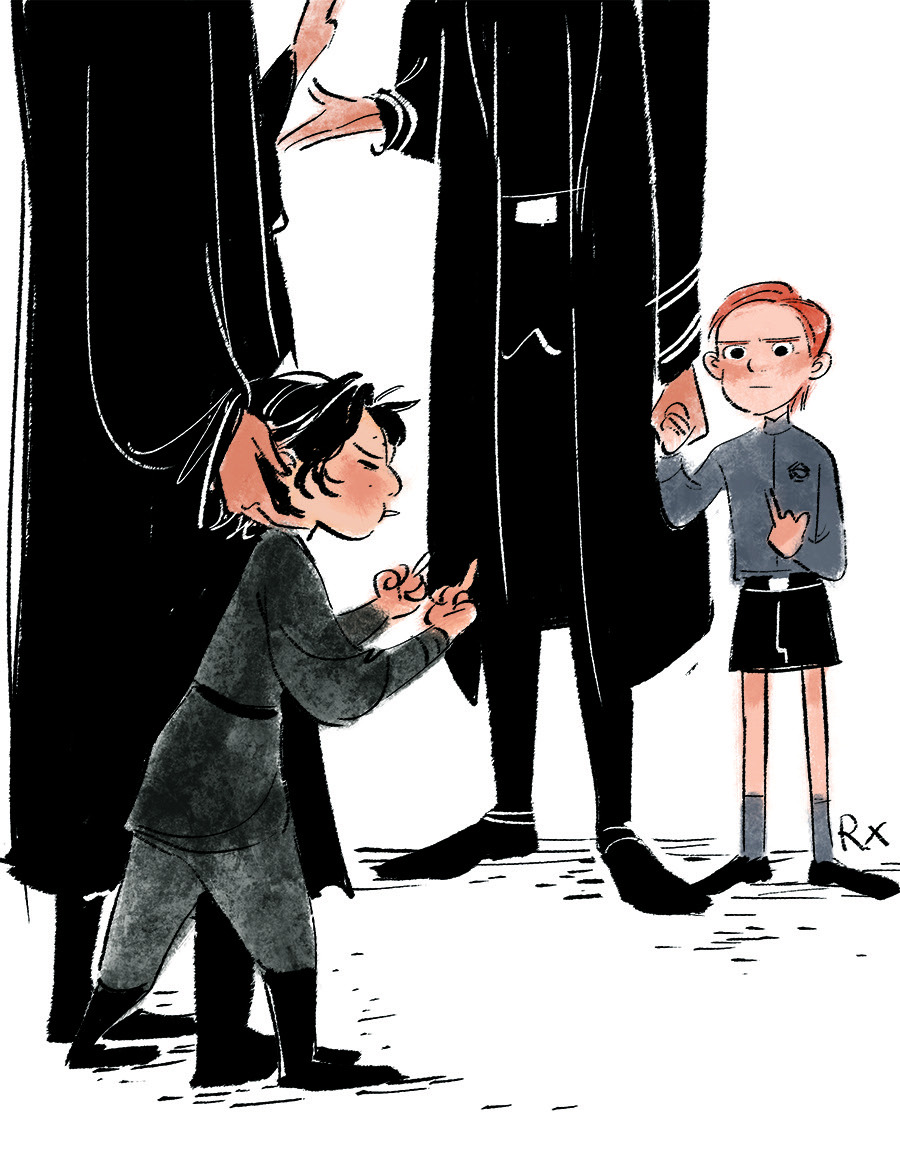
While I would like to stick to the films, for the most part, there are a few details about Hux and Poe that aren’t mentioned in the films that need to be addressed. For one, they are the only two new characters who were born before the Empire fell. Poe was born to rebels two years before the Battle of Endor, while Armitage was born the year of the Battle of Yavin to an imperial father and a kitchen worker. This is highly interesting as both characters can be seen as not only following in the footsteps of their parents but also seem to want to live up to the legacies they were left. Poe’s mother, Shara Bey, was a pilot for the Rebellion. Brendol Hux, Armitage’s father, was an Imperial and later an officer of the First Order. It’s fascinating then, that Poe and Armitage then go on to become focal points for the Resistance and First Order, both organizations that borrow heavily aesthetically and ideologically from the Rebellion and Empire respectively. In a sense, these two characters were raised in a way the predisposed them to the role they now play. In a saga that deals heavily with legacy and what that means, it appears that it’s not just the Skywalkers who have passed on a legacy of conflict.
In some sense, this puts the conflict between the Resistance and the First Order in a new light. This is a multi-generational conflict.
True Believers
As leaders on their respective sides, it should be no surprise that both Poe and Hux really do believe in their causes. Hux’s near orgasmic awe at seeing Starkiller Base fire in TFA and Poe’s grim “we are the spark that will light the fire that will burn the First Order down” set both of them up as assured in their desire for the destruction of those who oppose them. Though these two after sometimes played for laughs (especially when pitted against each other) they’re not messing around when it comes to their dedication to their causes. While it’s much easier to sympathize with Poe in this instance, it should be noted that his twist on Holdo’s line “we are the spark that will light the fire that will restore the Republic” is a destructive statement. The shadows cast on his face and the way his eyes are turned down as he says this line are ominous as well, which should lead the audience to have some apprehension about what Poe wants. This is deliberate as it frames Poe not in looking to rebuild something that was but to break something that is. It’s directly in contrast with Rose’s “saving what we love” line as well. This could potentially be a foreshadowing for what’s to come, especially when it comes to the ways in which Poe and Hux might interact in the future.
Ego and Issues with Authority
The opening scene of The Last Jedi really sets up a lot, if you ask me. Not only do we get the introduction of Poe’s arc, we also get our first on-screen juxtaposition of Hux and Poe and we see how truly alike they are. Both of them are too busy smarting off to each other, being drawn into a pissing contest, and ignoring wiser officers to realize they’re both losing. Hux’s ego is bruised and as such he focuses more on Poe than he does the threat to the other Star Destroyer, wasting valuable time. Poe too is so focused on taking out a Star Destroyer that he ignores direct orders and does whatever he wants, being cocky enough to think he knows better than his boss. They’re too focused on messing with each other and winning, not in the long term, but in the short term, to be effective. Both are ego driven at this moment and because of it, they both suffer heavy losses.
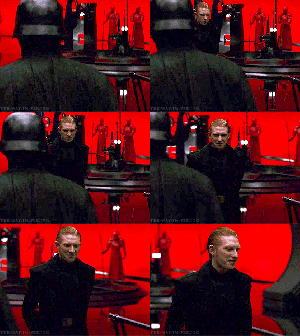
Interestingly, though, is that they seem to mirror each other for the rest of the movie as well. Once the fight is over, Poe is reprimanded and slapped by Leia, then demoted. Hux is reprimanded by Snoke and thrown around and dragged across the floor. (Hux isn’t demoted, of course, but his harsher physical punishment probably had the same effect on him as Poe’s demotion did on him.) Poe’s superior is then taken out of commission and Poe then undermines her by going behind her back and arranging plans without her consent. Poe then stages a mutiny but cannot complete his plan because he’s thwarted. Hux also sees his superior taken out of commission (though on a much more permanent basis) and immediately undermines his new boss.
The fact that we do see Poe attempt a mutiny but we don’t see Hux attempt a coup could be possible foreshadowing for EP IX. It’s very possible that the way these two characters have mirrored each other so far is supposed to clue us in on what Hux may have planned for Supreme Leader Ren very shortly. Either way, it’s clear that both of these characters have issues with authority, especially when those authorities disagree with them. While Poe has experienced a character arc that could potentially change his view on how to fight, Hux has not and there is a lot of potential for more conflict between these two.
Why Are They Foils?
By making Hux and Poe so similar in background and temperament, the similarities between different sides of the war are highlighted. Now, obviously, there is a moral distinction to be made here. The First Order is an evil organization. They build weapons that destroy systems in the seconds. The Resistance, on the other hand, is a cobbled together group of people trying to stop the evil organization and they don’t have super weapons. This moral distinction is key because I don’t believe the intention is to make the two sides equal in terms of capacity for evil. Rather, the similarities between Hux and Poe might serve to show things we associate with “goodness” on the side of a conflict we agree with are the same things we associate with “badness” on the side of a conflict we don’t agree with. Poe and Hux both have a strong sense of conviction, they’re both ambitious and they both have a legacy of important they’re trying to live up to and surpass. Poe’s defiance of Holdo is divisive, to say the least, and it’s hard for us to accept that a character we’re used to seeing as a hero could have a plan that would go wrong and make them look bad. We expect that kind of defiance and outcome from an antagonist – in someone like Hux.
In my mind, the point of these two characters is to show that it’s not how you fight that’s really important, it’s why you fight. Both Hux and Poe were born into war and found themselves growing into another one. Both men want to destroy what the other is a part of. What will differentiate the two, however, is whether or not Poe will truly embrace the message of saving what you love rather than destroying what you hate. The key will be whether or not Poe can move past his ego and the legacy of war while Hux remains deeply entrenched in it. Based on the fact that Poe is a PoV character and he is on the more moral side, it’s likely he will be able to do this, and the foils will serve as contrasts to one another.







































 This is Not a Blog